After reading this sentence, close your eyes, take a deep breath in, and let it out.
Feels good right?
Now, do it again; but this time notice how the exhale feels different than the inhale.
Your inhale rejuvenates, and your exhale offers release. This eternal cycle of restore and release is so often taken for granted–we are rarely conscious of its pattern.
Believe it or not, you just experienced the foundation of yoga: Breath.
So What is Yoga?
Yoga is more than stretching and sweating.
I’ve met many people who are reluctant to try yoga, fearing they are not flexible or fit enough. I wish these people knew that the true challenge of yoga lies in confronting one’s ability to let go.
The reward? Freedom.
By learning to let go, you liberate yourself from fear, resentment, and the need to be in control.
We call yoga a practice for a reason. This is something you will constantly work towards. Just when you think you’ve got it figured out, life will hand you an opportunity to re-learn how to surrender.
The first thing you can practice letting go of is the self-limiting belief that you are not enough to try something new.
Now that you’re ready to give it a go, let’s talk about what else yoga can teach you to detach from.
In this post, we’ll delve into the yogic principles that guide us toward letting go and explore how they can lead to a more conscious life. You will also learn 5 beginner-friendly poses that will push you to practice the art of letting go.
Surrender and Detachment in Yoga
In yoga, surrender (Ishvara Pranidhana) and detachment (Vairagya) are fundamental concepts deeply rooted in ancient philosophy.
They encourage us to relinquish our attachment to outcomes, desires, and our ego. By letting these things go, we make space for inner peace, contentment, and conscious living.
Surrender: Letting Go of Control
Surrender, in the context of yoga, doesn’t mean giving up or losing. Instead, it’s about releasing the need for control.
It’s the willingness to accept situations, people, and life as they are–embracing both the pleasant and the challenging sides.
In asanas (yoga postures), we surrender to the breath, allowing it to guide and time our movements. This practice of surrender during yoga helps us cultivate trust, not just in the practice but also in the rhythm of our intuition.
Detachment: Freedom from Attachments
You’ve probably heard the adage: “If you love something, let it go.”
This is just another way of saying ‘practice detachment.’
Attachment, in its simplest form, is fear. Detachment, or Vairagya, is the art of practicing non-attachment to material possessions, relationships, and even our own identity.
It encourages us to enjoy life’s experiences without becoming overwhelmed by the fear of losing them: A lesson I am constantly re-learning.
In yoga, detachment is the habit of observing our thoughts, emotions, sensations, and fumbles without getting entangled in them. It’s the art of surrender.
Five Yoga Poses for Letting Go
Yoga poses offer a physical way to practice surrender and detachment.
By consciously releasing tension and resistance in these postures, we can enjoy both mental and physical benefits. Try these five beginner-friendly yoga poses that may help you with letting go.
Child’s Pose (Balasana)
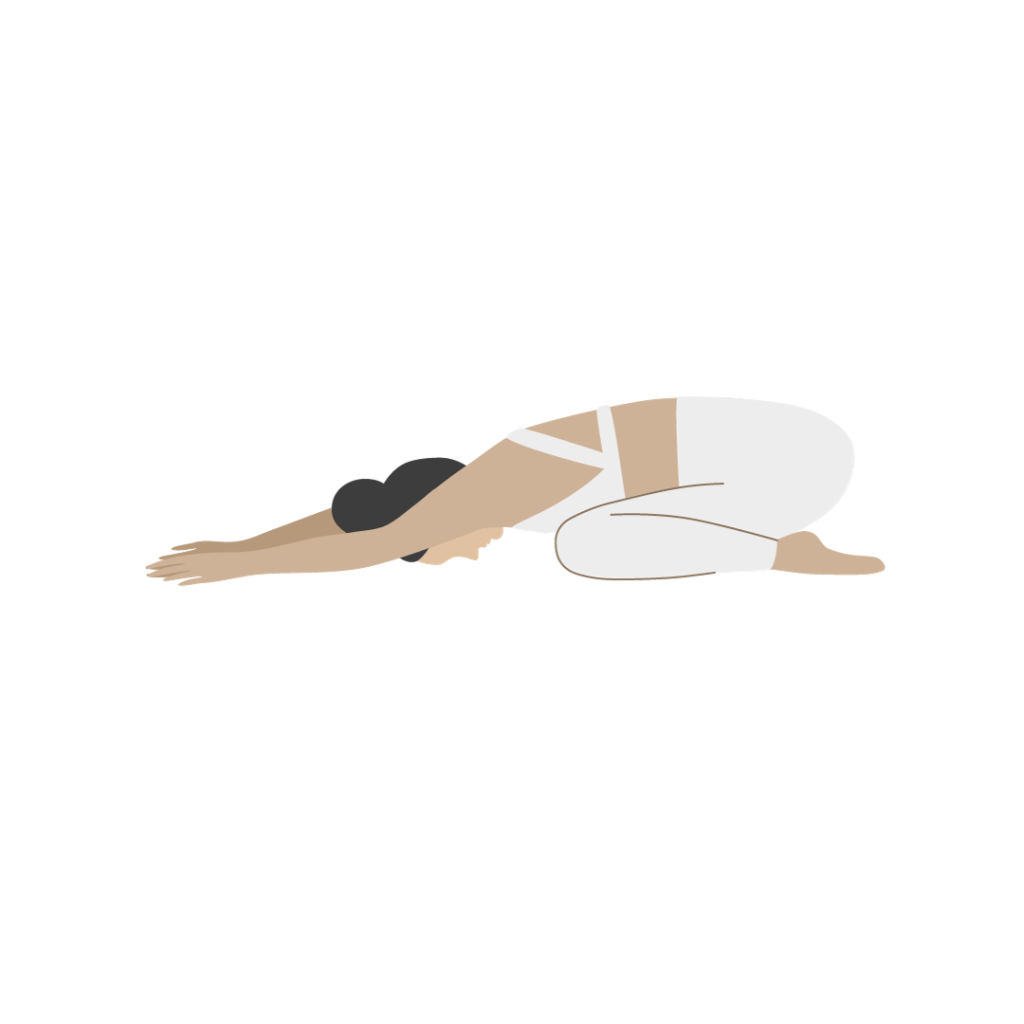
Child’s Pose is the embodiment of surrender. You can see how the posture represents submission, so embrace this! Submit to the rest and release this pose offers.
How to try Child’s Pose:
1. Start in a tabletop position on your hands and knees.
2. Lean back so you’re sitting on your heels.
3. Walk your hands all the way forward so your torso lies flat on your thighs.
4. To deepen the forward fold, you can open your knees and make space for your torso between your thighs.
5. Hold the pose for at least 10 breaths.
Bridge Pose (Setu Bandha Sarvangasana)
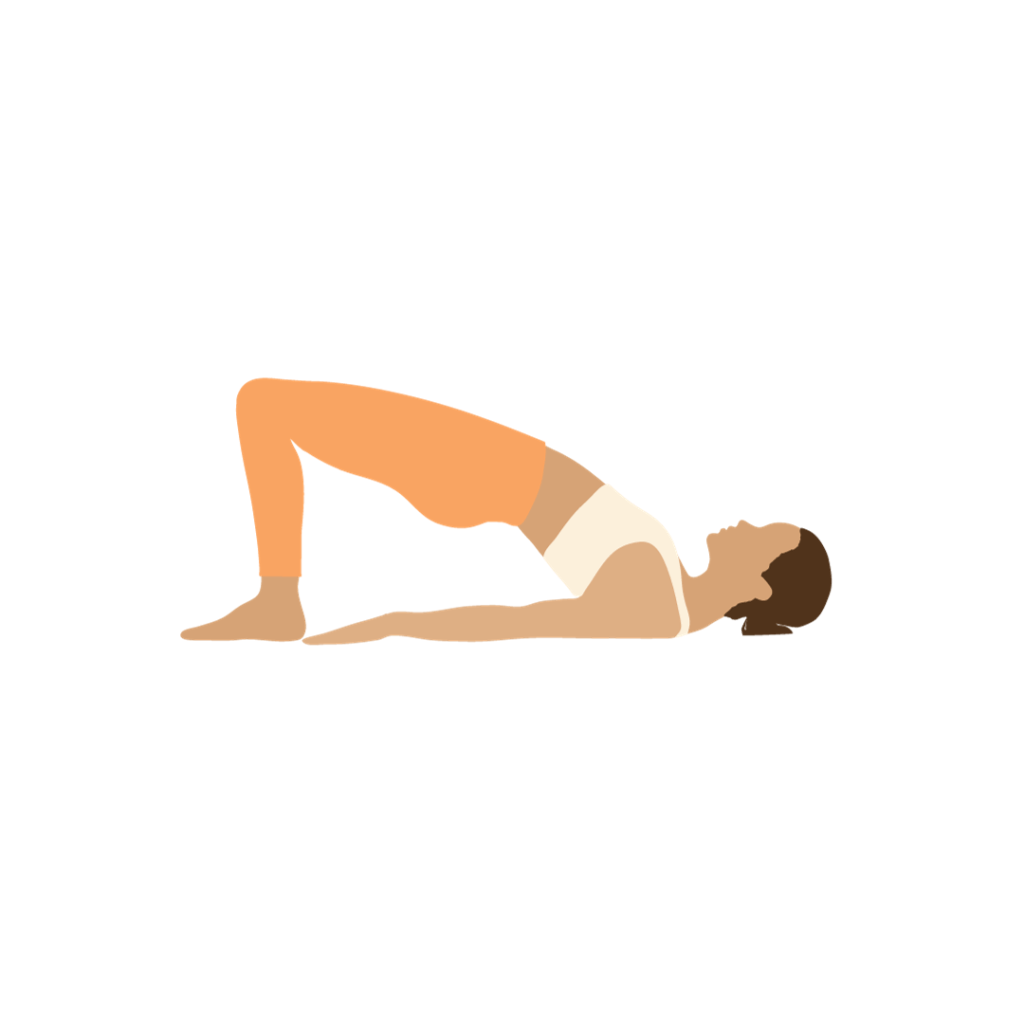
Backbends are known for their heart-opening qualities, and Bridge Pose is an excellent beginner backbend to experience these benefits.
As you lift your hips in Bridge Pose, breathe into the sensation of opening your heart and chest. Notice what feelings this posture brings to the surface.
Here is how to practice Bridge Pose:
1. Lying flat on your back, bend your knees so that the soles of your feet are touching the ground.
2. Place your arms alongside your torso, palms down.
3. Pushing from your feet, lift your hips off the ground and squeeze your Glutes to maintain the posture.
4. You can keep your arms where they are, or clasp your hands together for a fuller chest-opening experience.
5. Hold the pose for at least 10 breaths.
Tree Pose (Vrikshasana)
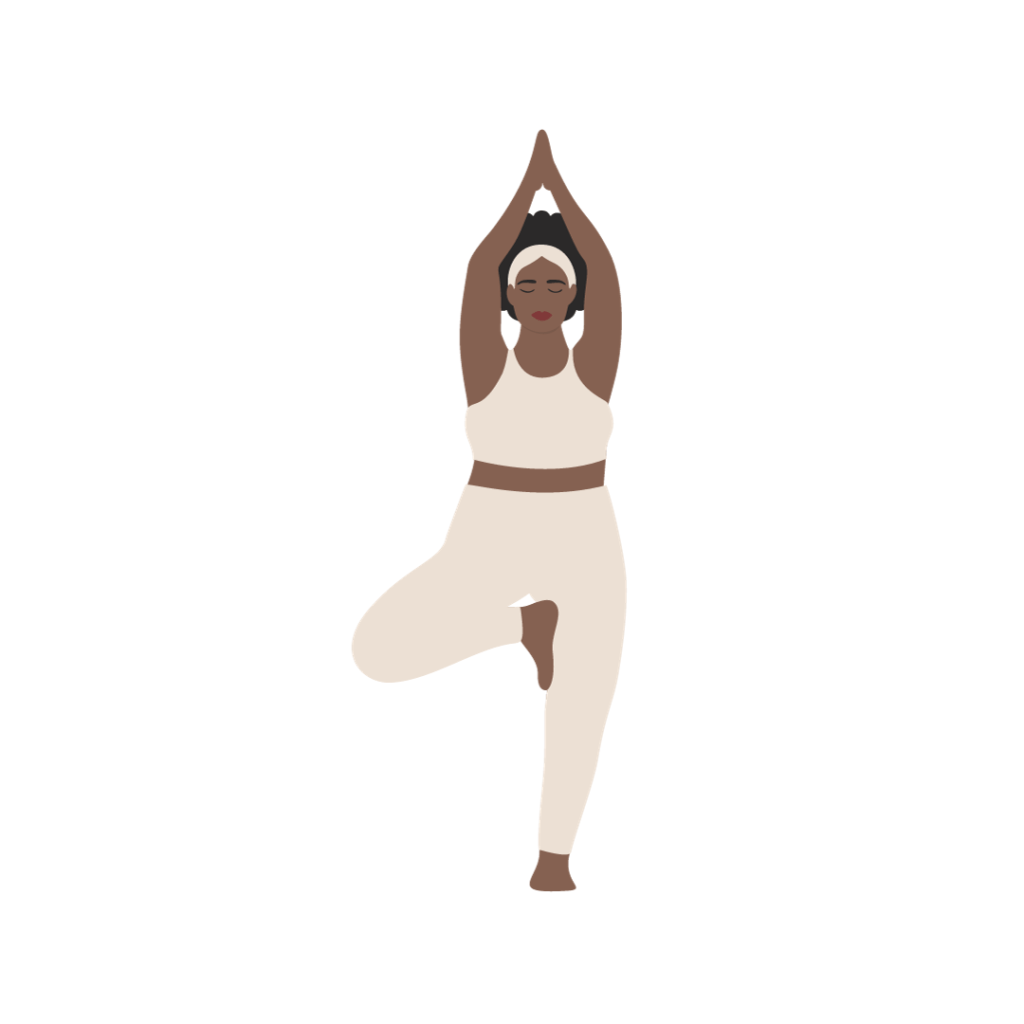
This balancing pose requires concentration and detachment from external distractions.
As you root down into the ground and extend upward, Tree Pose challenges you to balance. You will likely sway and need to reset once or twice.
Let go of the need to be perfect in this pose. Allow yourself to fall out of it and try again.
How to do Tree Pose:
1. Begin standing tall, with both feet planted firmly on the ground.
2. Engage your core and drop your shoulders away from your ears.
3. Place your hands on your hips.
4. Find an unmoving spot in your eyeline to focus on while you shift your weight onto your left leg.
5. Begin to lift your right foot off the ground, bending your right knee.
6. Place the bottom of your right foot either inside your left shin or inside your left thigh. You can place it anywhere on your left leg other than the inside of your knee.
7. Once steady, you can play around with different hand variations to test your balance.
8. Repeat steps 1-7 on the opposite leg.
Pigeon Pose (Eka Pada Rajakapotasana)
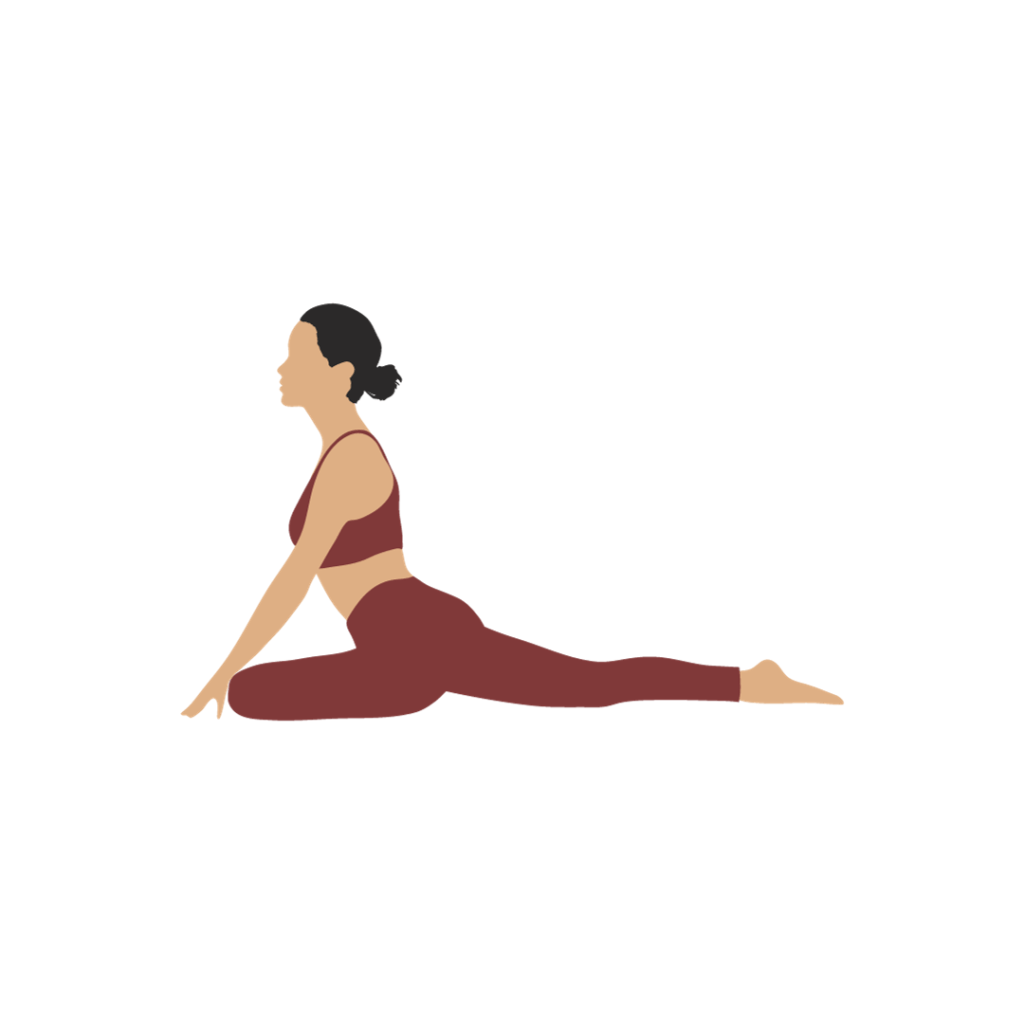
For generations, people have intuitively known that trauma is stored in the hips. Today, science is catching on and working to prove this through research.
Pigeon Pose is a deep hip opener that can bring up strong emotions and stored tension. By surrendering to the sensation and discomfort, you can practice letting go of trauma and tension held in the hips.
How to practice Pigeon Pose:
1. You can move into this pose in a variety of ways. I suggest starting in a tabletop position for beginners.
2. Bring your right knee to your right wrist, placing your right foot in front of your left hip.
3. Extend your left leg behind you so it lies straight on the ground.
4. Adjust your position, ensuring there is no pressure on your right knee. The full extension of this pose would look like a 90-degree angle of the right leg. Take whichever extension feels most comfortable for you. As you relax into the stretch, you can always reposition your legs to deepen the intensity in your hip.
5. Placing your hands on the ground, straighten your spine and slightly lift your chin. Take at least 10 breaths in this heart-opening position.
6. Walking your hands in front of you, lower your torso onto your right thigh to further stretch into your hip joint. Hold for at least 10 breaths.
Corpse Pose (Savasana)

Savasana is the ultimate pose of surrender. In this final relaxation posture, you let go of all bodily effort and simply rest.
While Savasana may be the easiest physical posture, many people struggle with the mental surrender that the pose requires. Lean into the discomfort of stillness here.
How to practice Savasana:
1. Lie flat on your back in a position that is comfortable for you. You might bend your knees or straighten your legs, whichever is more relaxing for your body.
2. Place your arms along your side, palms facing up.
3. Close your eyes and focus on your breathing.
4. Observe the thoughts that come and go in the silence. Practice detaching from each thought and letting go with each exhale.
Embracing Letting Go
As you step off your mat and into the rest of your day, remember that letting go doesn’t mean losing; it means gaining peace.
So, embrace the art of surrender, both on and off your mat, and enjoy the freedom it brings to your life.

 The Conscious Chronicles